Adhesive Foam Surface Compatibility Guide
Sticky Pad Shop pads use a 1/4-inch solid black foam core with 3M 468MP transfer adhesive laminated to both faces. The adhesive bonds best when both surfaces are clean, dry, smooth, and able to accept firm pressure.
Best candidates for adhesive foam pads
Smooth, non-porous materials usually allow the adhesive to make the fullest contact. Clean metal, glass, acrylic, painted metal, equipment panels, sealed wood, and many rigid plastics are common candidates. Actual performance depends on the exact coating, surface energy, cleanliness, temperature, load, and application, so test the complete assembly before production use.
| Surface | Starting point | What to know |
|---|---|---|
| Metal and painted metal | Good candidate | Clean away oil and oxidation. The bond is only as strong as the paint or coating. |
| Glass and acrylic | Good candidate | Remove fingerprints, dust, polish, and cleaner residue before application. |
| Smooth rigid plastic | Test first | Many plastics work well, but low-surface-energy plastics such as polyethylene and polypropylene can be difficult to bond. |
| Finished or sealed wood | Test first | Use only on smooth, stable finishes. Raw, dusty, or porous wood reduces contact. |
| Painted drywall | Use caution | Removal can lift paint or paper. Test in an inconspicuous area and use only for lightweight, nonvaluable items. |
| Textured walls | Not ideal | Texture leaves gaps and limits adhesive contact. |
| Concrete, brick, and masonry | Not recommended | Rough, dusty, and porous surfaces generally need an appropriate mechanical fastener. |
| Rubber, fabric, or flexible vinyl | Test first / not ideal | Oils, plasticizers, fibers, and movement can interfere with the bond. |
Surface preparation
- Confirm that the surface itself is sound. Loose paint, powdery coatings, corrosion, and weak finishes can fail even when the adhesive remains attached.
- Remove dust, grease, wax, silicone, polish, and cleaner residue using a method that is safe for the surface.
- Allow both surfaces to dry completely.
- Apply at a moderate room temperature when possible. Avoid applying to a very cold, hot, or damp surface.
- Press firmly across the entire pad so both adhesive faces make full contact, then allow time before loading the assembly.
Moisture, heat, UV, and outdoor use
3M 468MP transfer adhesive is known for resistance to moisture, solvents, heat, and UV exposure. That does not make the finished foam pad or installation waterproof, permanent, or suitable for every outdoor surface. Water paths, edge exposure, temperature cycling, movement, and the bonded materials all affect performance. For outdoor or demanding use, test a sample in the real environment first.
Important limits
- Do not use adhesive pads as the sole support for people, heavy objects, valuable artwork, safety equipment, overhead loads, or items whose fall could cause injury or damage.
- Do not assume a bond strength from surface type alone. Pad area, load direction, vibration, temperature, and aging matter.
- Removal may mark, stain, or damage paint and delicate finishes.
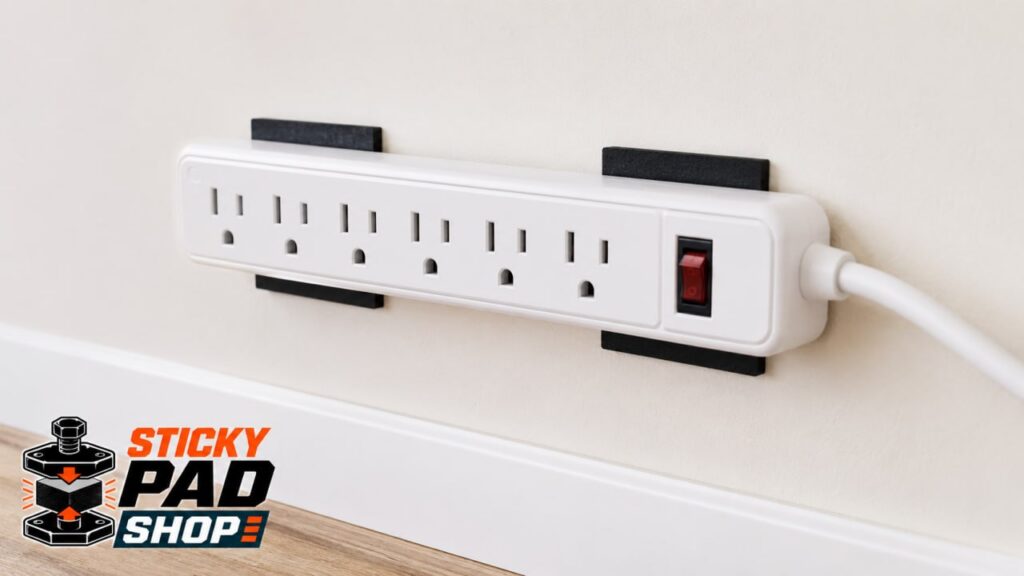
- Electronics applications must maintain required electrical clearance, insulation, ventilation, and service access.
Not sure about your surface?
Send the materials, finish, pad size, quantity, environment, and intended load. We can help narrow the options, but the customer remains responsible for testing the final application.